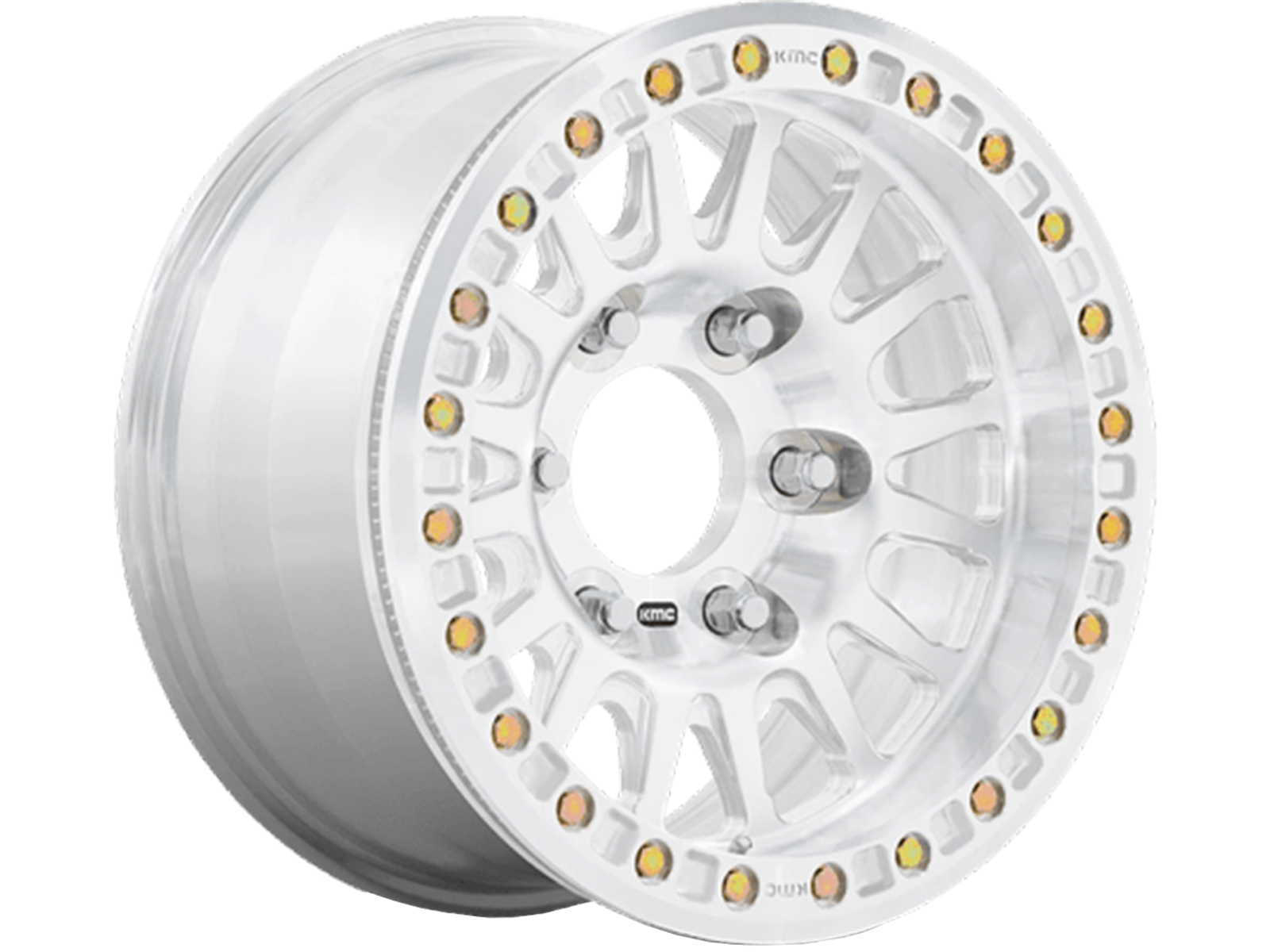
Beadlock wheels are specialized multi-piece rims for off-roading that mechanically clamp a tire's bead to the wheel using a bolted ring. The ring prevents the tire from slipping or unseating at very low tire pressures. Running tires at low pressure offers maximum traction on tough terrain like rocks or sand. Unlike standard wheels relying on air pressure to secure the tire to the wheel, beadlocks physically secure the tire for extreme conditions. Beadlock wheels are not D.O.T. certified for street use.
How They Work
- Mechanical Grip:
A metal ring (the beadlock) bolts onto the wheel's outer edge, compressing the tire's bead (the edge that seals against the rim) directly onto the wheel. - Low PSI Capability:
This clamping action allows you to run extremely low tire pressures (e.g., 10-15 PSI or lower) for better flotation and grip without the tire coming off. - Protection:
The ring also adds a protective lip, guarding the tire's edge from trail obstacles.
Types of Beadlocks
- True Beadlocks:
The standard for serious off-roading, featuring a single outer ring, sometimes with dual valve stems for easier airing. Simulated/Fake Beadlocks:
Non-removable cosmetic rings that look like beadlocks but don't offer the functional clamping, often found on street wheels.
Pros & Cons
Pros:
- Allow safely airing down tires to very low pressures for maximum traction off-road.
- Stronger and more durable in extreme off-road conditions.
- Offer an aggressive, rugged aesthetic that many truck owners appreciate for style upgrades.
Cons:
- Not typically DOT (Department of Transportation) approved or street legal for highway use due to safety concerns like bolts potentially loosening at high speeds.
- Heavier than standard wheels, which can affect balancing.
- Require regular and time-consuming maintenance, including frequent torque checks on all the bolts.
- More expensive due to the complex design and manufacturing process.
Common Uses
- Usage: Rock crawling, desert racing, extreme overland adventures.